
Mitchell County Civil Docket Searches
Start with Kansas Case Search. Accept the terms and set Court to District. Then pick a search mode: Case Number, Party Name, Business Name, or Party As Business Name. Enter your term, choose Mitchell in the County field, and select Civil. Family, Probate, and Mental Health sit under separate case-type options, so a Civil-only docket search will skip those matters. Finish the human check and submit.
The web portal is not the only route. Pam Thiessen, Clerk of the District Court, keeps the Mitchell County register and filed records at 115 South Hersey, Beloit, KS 67420. Call 785-738-3753, fax 785-738-4101, or visit from 8:30 a.m. to 4:30 p.m. Monday through Friday. When a public filing is missing online, try the public terminal, an in-person request, mail or fax, or a focused written KORA request. Confirm the delivery route and fee estimate first.
- Select District court and the best search type.
- Enter a case number, party name, or business name.
- Choose Mitchell County and the right civil-related case type.
- Compare roles, dates, category, status, and judicial officer.
- Read the chronology and request a specific copy if needed.
Mitchell Civil Party Search Choices
Party role shapes any Mitchell County civil result. Plaintiff and petitioner name the side that opened the case. Defendant and respondent name the side answering it. Search a company through Business Name or Party As Business Name instead of forcing it into a personal-name field. An older Smart Search guide also covers nickname, sounds-like, status, judicial-officer, and filing-date controls. Rely on the fields the current screen actually shows.
| Known detail | Search choice | Check in the result |
|---|---|---|
| Exact court number | Case Number | County, type, file date |
| Person | Party Name | Role and matching dates |
| Organization | Business Name | Formal name and role |
| Broad results | Date and status filters | Do not infer from a name alone |
Portal results are general reference material, not certified court records. The court offers no public bulk export or all-party compilation. If nothing comes back, fix the spelling and name order. Verify the case type. Then call the clerk. A missing web result can mean an older file, a restricted matter, or a configuration quirk. It does not prove a civil filing never existed.
Civil Dockets: What They Show
The Mitchell County register of actions is also called the events index. It is a dated outline of court activity. It identifies the court, county, case number, subtype, and file date. It also lists status, judicial officer, parties, and attorneys. Later entries may cover service, pleadings, motions, settings, orders, judgment, satisfaction, or appeal. An attachment may appear online. Still, the index and the full document file are different things.
| Case number | Court identifier; formats may change by filing era. Use a synthetic value in examples. |
|---|---|
| Parties | Plaintiff and defendant, or petitioner and respondent, plus attorneys where displayed. |
| Filings | Petition, answer, counterclaim, cross-claim, notice, summons, or return of service. |
| Motions | A request for an order, with later briefing, setting, and ruling entries when public. |
| Judgment | Formal adjudication, dismissal, settlement, default, satisfaction, or post-judgment event. |
| Access flag | A document may be redacted, restricted, sealed, or unavailable remotely. |
Mitchell Civil Filings by Number
The official 2024 Kansas civil-filing report counts 197 Mitchell County filings through June 30, 2024. Those totals cover the reporting period only. They are not open cases today, and they reveal nothing about who won.
The regular-action row shows four contract, five other, 10 real-property, and three tort filings. Limited actions add 121 contract filings plus one other. A combined table lists 53 domestic-relations, protection, and parentage filings. That spread is why case type matters when you search. Raw totals also cannot serve as results, workload, or the facts of one Mitchell County case.
What Cases Fill the Civil Docket
Mitchell County District Court holds broad civil jurisdiction. The official county page lists damage suits, divorce and domestic relations, probate and estates, guardianships and conservatorships, mental-health matters, small claims, and civil jury trials. Kansas statistics split regular actions from limited ones. Case type shapes both the portal filter and how much of the court record stays public.
- Contract, debt, and other limited civil actions.
- Real-property, tort, and other regular actions.
- Small claims within the district-court structure.
- Divorce, parentage, and other domestic relations matters.
- Probate, estate, guardianship, and conservatorship proceedings.
- Protection and mental-health cases subject to added access limits.
Municipal courts do not serve as a general civil forum for these state-law matters. A district case may hold an appeal. It may also hold a related reference. Appellate review runs through the Kansas Court of Appeals or Supreme Court. Federal civil claims belong in federal court. Pick the right court and category. Otherwise a statewide search turns into a pile of unrelated names.
Mitchell Civil Events Need Context
A filing is not a judgment. A petition states a request; an answer responds to it. A motion asks the court to act, and an order records that action. Service entries deserve care too. A return may show service or just an attempt. Neither alone decides the claim. Read every civil event with its date, document label, and party role.
- Pending
- Use only when the portal displays that status.
- Default
- Use only when a default is entered in the record.
- Judgment
- A formal adjudication or monetary or other ordered result.
- Satisfied
- A recorded satisfaction, not a guess from payment activity.
- Disposed
- The portal's case-status label; read the final order for detail.
A granted motion does not always close a case. A continuance only moves an event. Treat each settlement note, dismissal, judgment, garnishment, lien, or satisfaction entry on its own terms. If the web view stops at a setting or motion, check the later public document or ask the Mitchell County clerk whether another entry exists.
Hearings on the Civil Docket
Mitchell County posts no separate public calendar, so civil settings show up inside the case detail instead. Each entry carries a date, time, event type, judicial officer, location, and status, sometimes with a linked notice or order. Read the label with care. A scheduling order stacks several deadlines together, while a status conference, motion hearing, pretrial conference, or trial setting each does something different on the docket. The label tells you what the event is for.
Status words change the picture too. Continued means the event moved. Reset means a new setting replaced the old one. Cancelled or vacated means nothing is scheduled anymore, though the earlier entry stays on the record as history. Always chase the newest order. If no courtroom is listed, do not guess one. Before you travel, call the Mitchell County clerk with the case number, date, and event type. The Mitchell County court schedule offers a fuller way to double-check a date.
A file-date range narrows case filings; it is not a date-only hearing calendar or an exportable calendar feed.
Older Mitchell Civil Documents
Online attachments in Mitchell County generally start with the date the county joined Kansas eCourt. So a civil case may show a full index in the public record yet offer no remote copy of an older pleading or order. Some of that converted material sits on the courthouse public terminal. It never reaches the web. The terminal still will not open sealed or nonpublic records.
A filing you need may be missing. Call the clerk and ask whether it sits at the terminal or requires a written request. Give the case number, the filing name, the event date, and the format you want. Say whether you need a certified copy. Mail and fax are published channels. Use email only if the clerk confirms it is accepted. Authorized filers can work through Kansas eFlex. But that system is a filing tool, not a public record search or a copy-request portal.
The official Kansas district-court records guidance draws a line between online case information and the documents the court itself holds.
That line matters for Mitchell County case lookup. When the events index stops short of the actual filing, the clerk or the courthouse terminal is where the paper lives.
Who Can See Civil Dockets
Mitchell County civil docket information that is open to the public can be reached three ways: the public portal, the courthouse terminal, or the clerk. Not everything travels, though. Adoption, protection, juvenile, mental-health, and other listed case types may be restricted or missing entirely. Even an open case can hold a withheld document. Redacted identifiers stay protected, and a terminal is never a way around a seal.
Key Rules:
Kansas Supreme Court Rule 22 governs public portal and courthouse-terminal levels.
Kansas Supreme Court Rule 106B defines court case records, electronic access, and the register of actions.
K.S.A. 45-221 identifies records that need not be disclosed.
For a specific filing that is not restricted, use the official written court-record request process. The clerk may require advance payment. Keep the wording narrow. A broad demand does not obligate anyone to build a new compilation, and tight terms help you land on the right Mitchell County document without dragging in unrelated cases.
Mitchell Civil Inspection and Fees
K.S.A. 45-218 governs inspection during regular hours and how fast a custodian must respond. The manifest points to the official K.S.A. 45-218 page along with the related K.S.A. 45-219 fee provision.
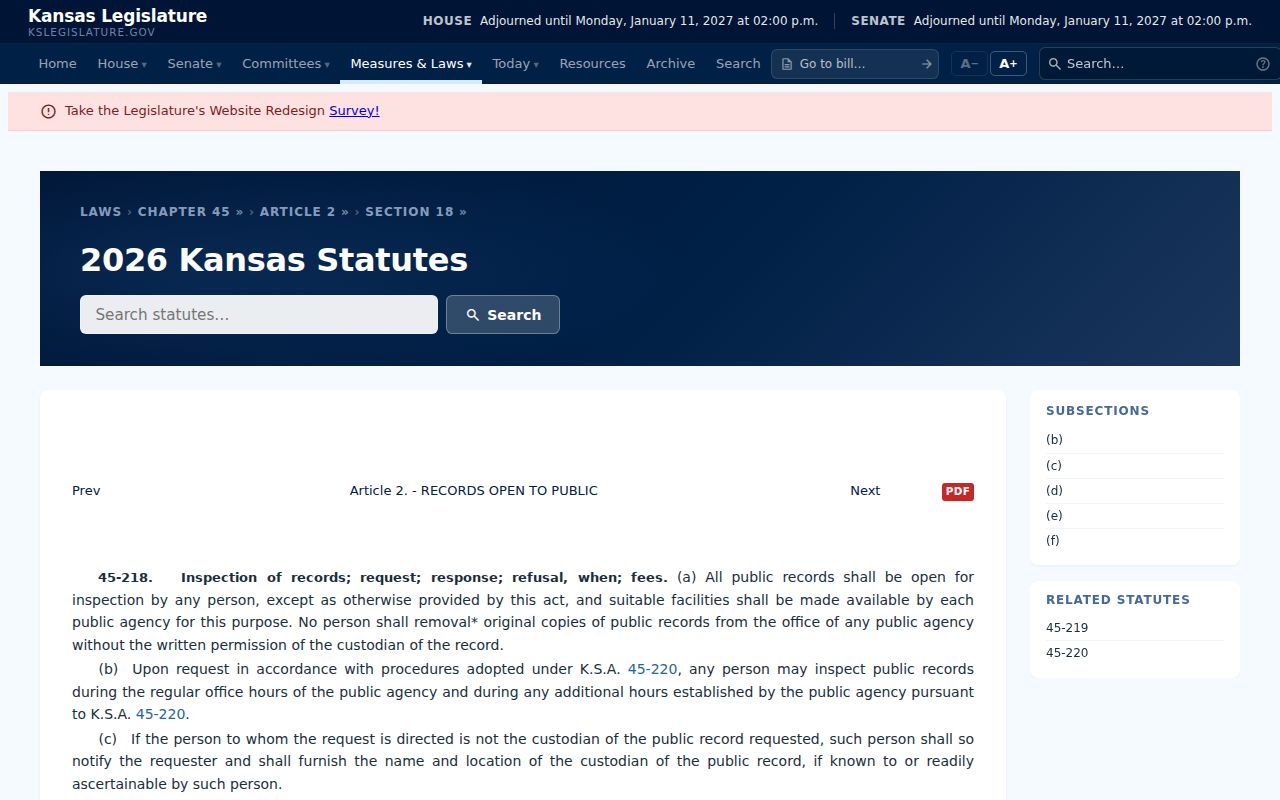
Under the first law, the office must act as soon as possible. The outer limit is the end of the third business day, or else a detailed explanation of the delay. That clock does not promise your copies arrive within three days.
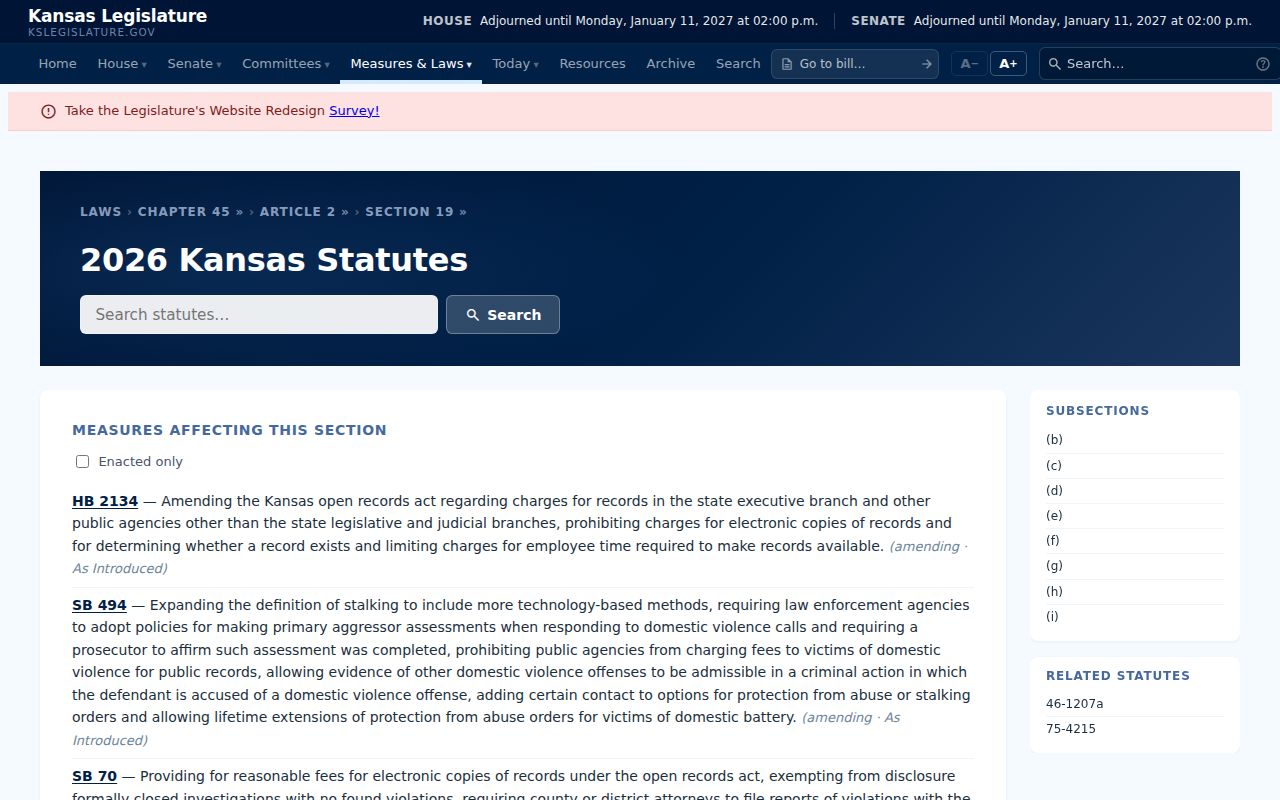
The second statute ties public access to lawful reproduction costs and possible advance payment. Mitchell County publishes no current amounts for plain, certified, exemplified, staff-search, or electronic copies. So ask the clerk for today's rate. Ask about your delivery options and an estimate too. An old fee schedule is not a safe guide.